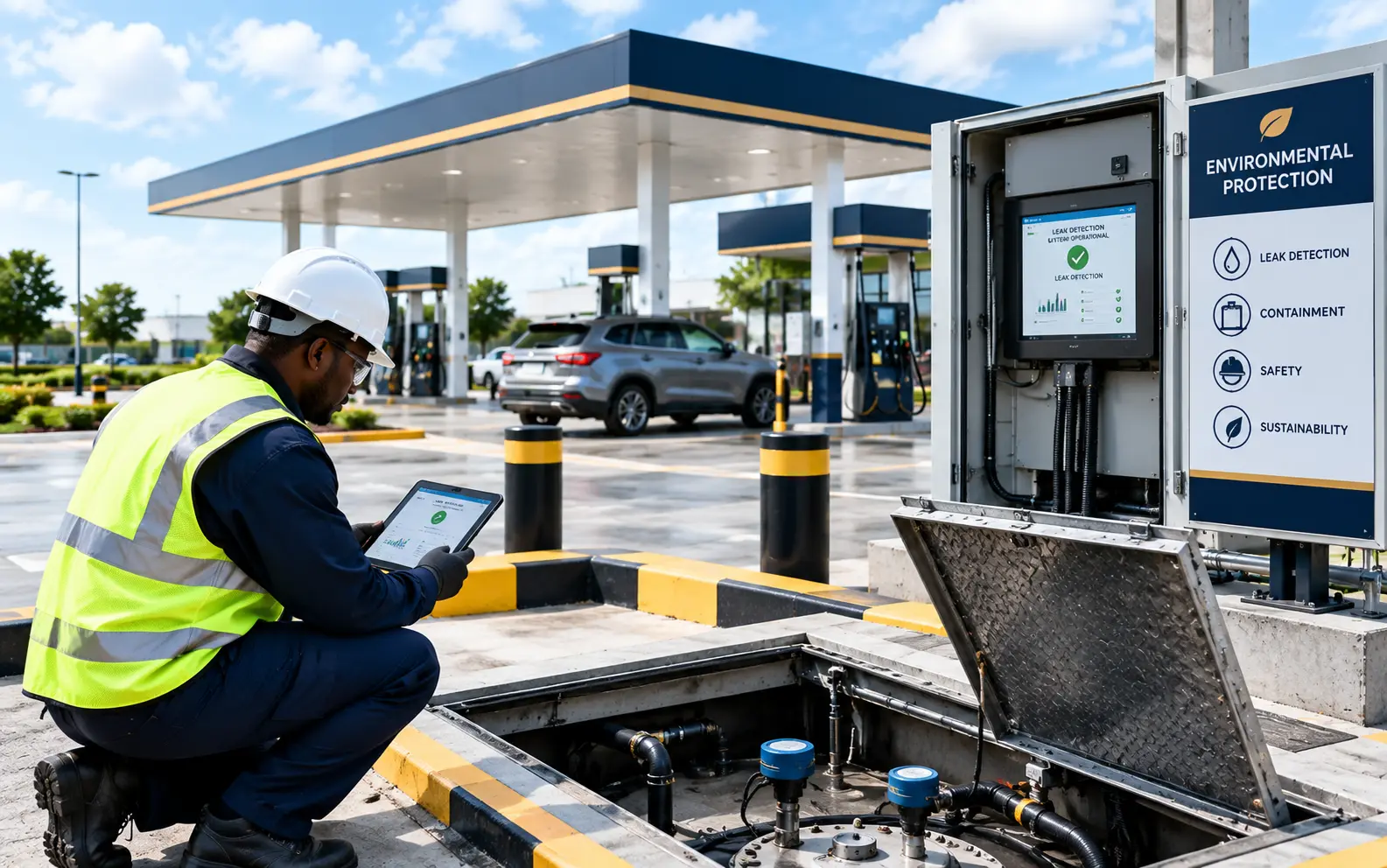
Safety & Environmental System
Safety-critical fuel environmentsFuel infrastructure operates in conditions that can challenge equipment over time, including buried services, exposed fittings, product compatibility demands and difficult access. We help operators address those risks through coordinated containment, detection and asset-protection measures rather than isolated product purchases. Our approach considers how a protective system is installed, inspected and maintained so that safety and environmental controls remain effective throughout the asset's life.
What This Covers
- Leak detection & containment systems
- Corrosion protection & asset preservation
- Fuel infrastructure safety solutions
Containment
Containment and secondary-protection components that help restrict the path and impact of an unintended release.
Leak detection
Monitoring and detection measures selected around the asset, product and response requirements of the site.
Corrosion protection
Tapes, wraps, coatings, linings and sealing systems selected for the exposure and service conditions involved.
Safety-focused infrastructure
Practical equipment and installation details that support inspection, isolation, maintenance and responsible operation.
Understand the exposure
Review products, installation conditions, access constraints and the consequences of failure.
Select the protective system
Containment, detection and corrosion-protection measures are matched to the asset and operating environment.
Coordinate installation
Protective systems are integrated with the equipment and interfaces they are intended to safeguard.
Plan inspection and care
Maintenance and inspection requirements are made clear so protection remains effective over time.
- Reduced exposure to leaks, corrosion and equipment failure
- Protective measures that can be inspected and maintained
- A more responsible and controlled fuel handling environment
Start a conversation
Ready for what's next?
From new fuel facilities to infrastructure upgrades and expanding networks, let's build a solution around your operation.